
Blockchain Timestamping Stops Deepfake Dashcam Tampering
Mar 8, 2026

Thomas Hepp
Mar 8, 2026

As dashcams become standard equipment in personal and commercial vehicles, their footage serves as crucial evidence in court cases, insurance claims, and traffic disputes. But there's a growing problem: sophisticated deepfake technology now threatens this digital evidence's reliability. Without proper verification, manipulated dashcam footage can lead to wrongful convictions, fraudulent insurance payouts, and serious miscarriages of justice.
Introduction to Blockchain Timestamping
Blockchain timestamping functions as an incorruptible digital notary. It creates an unalterable record showing exactly when digital data existed in a specific state. By anchoring information to public blockchains through cryptographic hashing, it establishes an immutable timeline proving when data was created and whether it's been modified since.
Here's how it works: the system generates a unique digital fingerprint of any file and permanently records this fingerprint across multiple blockchains. This creates mathematical proof that your original data existed at a specific moment—proof anyone can verify without trusting any central authority.
For dashcam footage, blockchain timestamping transforms ordinary video into court-ready evidence with verifiable integrity from the moment of recording.
The Deepfake Threat to Video Evidence Integrity
Video evidence faces an unprecedented crisis of confidence. In 2023, AI-generated deepfakes in legal and insurance disputes surged by 400%, leaving courts, insurers, and law enforcement questioning video footage they would have accepted without hesitation just a few years ago.
Traditional forensic methods can't keep pace. Today's AI tools alter timestamps, remove objects, change vehicle speeds, and even replace license plates in dashcam footage with barely detectable visual artifacts. Standard analysis often misses these manipulations entirely.
Imagine this scenario: You're driving carefully when another vehicle runs a red light and hits you. Your dashcam captures everything perfectly. But weeks later in court, you're shocked to see "your" footage showing you running the red light instead. The timestamp has been altered, the light color changed—and suddenly, you're liable for damages you didn't cause.
This happened to Michael Donovan, a commercial driver wrongfully terminated after manipulated footage appeared to show him texting while driving. "I lost everything because of a deepfaked dashcam video," he explains. "The video looked completely real—even I couldn't tell it had been altered. By the time forensic experts proved the phone had been digitally inserted, I'd already lost my job, my commercial license was suspended, and my reputation was destroyed."
The consequences extend beyond individual cases. The reliability of digital evidence forms the foundation of our justice system. When judges and juries cannot trust what they see, the entire evidentiary framework crumbles.
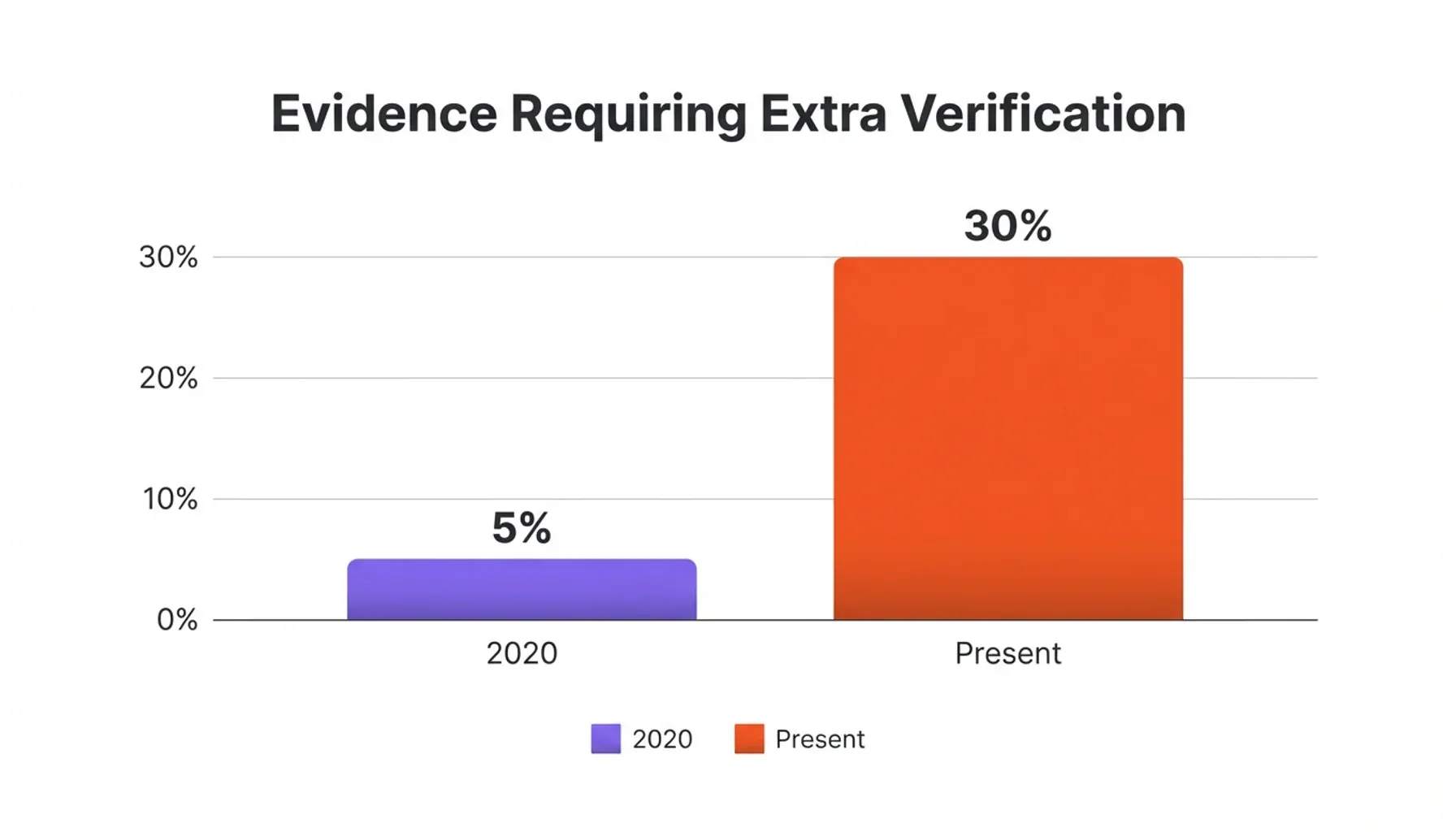
Law enforcement agencies report that nearly 30% of digital evidence submissions now require additional verification steps compared to just 5% in 2020. This verification burden strains resources and delays proceedings, particularly in jurisdictions with limited technical expertise.
The deepfake crisis demands tamper-evident recording systems that can mathematically prove video authenticity from capture through presentation. Without such systems, we risk undermining public trust in both transportation safety mechanisms and legal institutions.
How Blockchain Timestamping Works for Video Authentication
Blockchain timestamping provides a mathematically provable solution to the video evidence integrity problem. Unlike traditional verification methods relying on expert opinion, blockchain creates an immutable, independently verifiable record that cannot be altered—even by system administrators.
When a dashcam records footage, the system immediately creates a cryptographic hash—a unique digital fingerprint—of the video file using the SHA-256 algorithm. This transforms the digital file into a fixed-length string of characters. Even the tiniest change to the original file produces a completely different hash value, like how a single snowflake's pattern changes entirely with the slightest environmental shift.
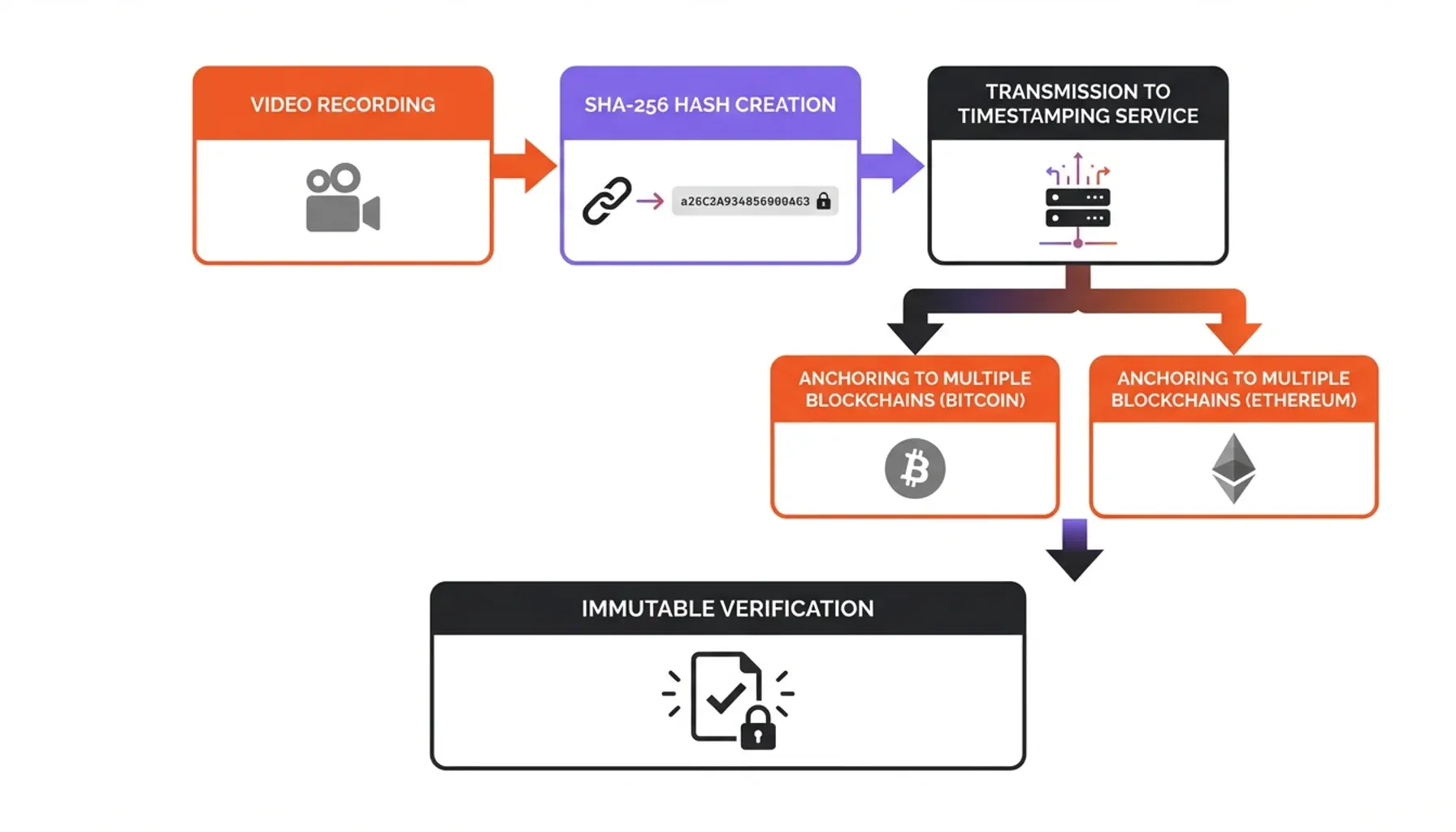
This hash is then transmitted to a blockchain timestamping service like OriginStamp, which anchors it to multiple public blockchains—typically Bitcoin and Ethereum. This creates redundancy and ensures your timestamp remains secure even if one blockchain were compromised.
The multi-blockchain approach distributes trust across independent networks. Each blockchain provides a different security model and consensus mechanism, creating a verification system that doesn't rely on any single authority. This proof of existence creates an unbreakable link between your original video and a specific point in time.
For dashcam evidence, this creates a verification pathway that is:
- Immediate: The hash is generated and submitted the moment of recording
- Immutable: Once recorded on the blockchain, the timestamp cannot be altered
- Independent: Verification doesn't require trusting the dashcam manufacturer, you, or any centralized authority
- Transparent: Anyone can verify the timestamp using public blockchain explorers
- Permanent: The blockchain record persists indefinitely, enabling verification years later
The technical implementation typically integrates the dashcam firmware with a timestamping API. When the camera begins recording, it simultaneously initiates the hashing and submission process. The blockchain transaction ID is then stored with the video file as proof of its integrity.
Blockchain Timestamping in Deepfake Detection
Blockchain timestamping takes a preventative approach to deepfake detection rather than trying to catch manipulations after they occur. Unlike AI-based detection systems that must constantly evolve to recognize new manipulation techniques, blockchain verification establishes content authenticity at creation—before any tampering can happen.
Think of it as a tamper-evident seal for digital content. When dashcam footage is timestamped at recording, any manipulated version would necessarily have a later timestamp or none at all.
Picture this verification process like a digital seal that breaks upon tampering. When you submit dashcam footage as evidence, its current hash is calculated and compared against the originally timestamped hash. If they match perfectly, your footage remains unaltered since recording. If they differ even slightly, the system immediately flags the discrepancy, revealing potential manipulation.
This method offers several advantages over traditional deepfake detection:
- You don't need to understand how the deepfake was created
- It remains effective regardless of how sophisticated manipulation techniques become
- It provides binary certainty rather than probabilistic assessment
- It creates evidence admissible in court without expert testimony
For dashcam systems specifically, blockchain timestamping creates a continuous chain of evidence from the moment of recording through presentation in court or to insurers, establishing what legal experts call "temporal immutability"—proof that evidence hasn't been altered over time.
Legal Advantages of Blockchain-Sealed Dashcam Footage
When you use blockchain-verified dashcam evidence, you gain significant legal advantages in today's era of increasing digital skepticism. The technology directly addresses the authentication requirements outlined in Federal Rules of Evidence 901(b)(9), which requires evidence to demonstrate "a process or system that produces an accurate result." Blockchain timestamps provide exactly this—a mathematically provable system that can authenticate digital evidence with certainty.
The legal landscape is already shifting to recognize blockchain verification. In the landmark case Doe v. Merchant (9th Circuit, 2022), the court explicitly accepted blockchain-timestamped evidence, noting that "the immutable nature of distributed ledger technology provides a level of authentication that meets and exceeds traditional chain-of-custody requirements." This precedent has opened the door for broader acceptance of blockchain-verified evidence across jurisdictions.
Beyond mere admissibility, blockchain timestamps dramatically reduce the need for expensive forensic authentication processes. Traditional digital forensics for video authentication can cost between $5,000 and $20,000 per case and take weeks to complete. Blockchain verification, by contrast, can be performed instantly at minimal cost, allowing you to quickly establish the authenticity of evidence without expert testimony.
For insurance companies, the benefits are equally compelling. Major insurers have reported that claims involving verified video evidence are settled 60% faster than those requiring additional investigation. This acceleration translates to significant operational savings and improved customer satisfaction. Several major insurers now offer premium discounts for fleet operators who implement blockchain-verified dashcam systems, recognizing their value in fraud prevention.
Legal professionals also benefit from clearer evidentiary standards. As one federal judge noted in a recent opinion, "Blockchain verification shifts the authentication question from a subjective assessment of expert testimony to an objective mathematical certainty." This clarity reduces motion practice around evidence admissibility and allows courts to focus on substantive legal issues rather than technical authentication questions.
For commercial fleet operators, the legal advantages extend to regulatory compliance. The Department of Transportation's electronic logging device (ELD) requirements increasingly intersect with video evidence requirements. Blockchain timestamping technology creates a seamless compliance pathway that satisfies both safety monitoring and evidence preservation mandates.
The ultimate legal advantage may be in deterrence. When potential fraudsters know that your video evidence is blockchain-verified and cannot be manipulated without detection, they are less likely to attempt fraud in the first place. This preventive effect reduces litigation frequency and creates a more honest environment for accident reporting and claims processing.
Enhancing Dashcam Security with Blockchain
Integrating blockchain with dashcam systems creates multiple security layers that protect evidence integrity throughout its lifecycle. Like a tamper-evident seal that surrounds the entire evidence chain, blockchain security extends from the moment of recording through storage, transmission, and final presentation.
The security architecture typically includes:
- Secure boot verification: Ensures the dashcam's firmware hasn't been compromised
- Hardware-based encryption: Protects video data from the moment of capture
- Immediate hashing: Creates the cryptographic fingerprint before any tampering can occur
- Real-time blockchain anchoring: Establishes temporal provenance immediately
- Encrypted transmission: Protects data during upload to fleet management systems
- Immutable storage: Prevents unauthorized modification after recording
- Verification interfaces: Allow authorized parties to confirm authenticity
This comprehensive approach addresses multiple attack vectors that traditional systems miss. While conventional dashcams might encrypt video files, they typically lack mechanisms to prove when recording occurred or whether files were modified after creation.
The blockchain component specifically prevents what security experts call "temporal attacks"—manipulations that alter the chronology of events or the timing of recordings. These attacks are particularly dangerous in accident investigations where the precise sequence and timing of events often determine liability.
For commercial fleets, enhanced dashcam security creates operational benefits beyond evidence protection. The same systems that secure video evidence can protect driver privacy, ensure regulatory compliance, and safeguard sensitive business information captured by vehicle cameras.
Implementing Blockchain Verification in Fleet Management Systems
When integrating blockchain timestamping into existing fleet management infrastructure, strategic planning offers substantial return on investment. The implementation process typically follows three pathways: hardware integration, software API implementation, or hybrid solutions combining both approaches.
For hardware integration, dashcam manufacturers are increasingly incorporating secure element technology directly into their devices. These tamper-resistant hardware security modules (HSMs) generate and secure the cryptographic keys needed for blockchain interaction. Leading manufacturers now offer "blockchain-ready" dashcams that handle the entire process—from video capture to hash generation and blockchain submission—without requiring additional infrastructure.
The software API approach offers greater flexibility for fleets with existing camera systems. Fleet management software providers can integrate with blockchain timestamping services like OriginStamp through RESTful APIs, adding verification capabilities to existing video management workflows. This approach typically requires:
- Secure hash generation at the point of video creation or upload
- API integration with a blockchain timestamping service
- Verification interface for retrieving and validating timestamps
- Audit log management for maintaining the verification trail
For high-volume fleets, automated timestamping workflows are essential. A typical implementation for a 500-vehicle fleet might process 2,000-3,000 video clips daily, each requiring secure verification. Automated systems batch these verifications to optimize blockchain transaction costs while maintaining individual file verification integrity.
The cost-benefit analysis for commercial vehicle operations is compelling. Implementation costs typically include:
- Hardware upgrades or API integration: $50-200 per vehicle (one-time)
- Blockchain transaction fees: $0.01-0.05 per verification (ongoing)
- System maintenance: $5-10 per vehicle monthly
Against these costs, fleets gain substantial benefits:
- Insurance premium reductions of 15-25% for verified systems
- Litigation cost savings averaging $7,500 per disputed incident
- Reduced claims processing time by 60%
- Fraud prevention estimated at 3-5% of total claim value
The technical implementation requirements must address several critical factors. Network connectivity is paramount—systems must handle intermittent connectivity by securely caching hashes for later submission without compromising verification integrity. Storage management is equally important, as high-resolution video files can quickly consume available capacity. Many implementations use a dual-approach: storing full-resolution video locally while immediately sending cryptographic hashes to the blockchain.
Integration with existing fleet telematics systems creates additional value beyond evidence verification. When blockchain-verified video combines with vehicle telemetry data (speed, braking, acceleration), it creates a comprehensive and indisputable record of driver behavior and incident circumstances. This integration supports not just post-incident investigation but also proactive driver coaching and safety management.
Case Studies of Blockchain Timestamping
National Logistics Company Reduces Insurance Costs
A national logistics company with 1,200 vehicles implemented blockchain-verified dashcams across their fleet in 2022. Within 18 months, they documented a 22% reduction in insurance premiums and a 78% decrease in disputed liability claims. Their most significant case involved a multi-vehicle accident where a competitor attempted to present manipulated footage showing their driver at fault. The blockchain verification immediately revealed the tampering, leading to a swift resolution in their favor and saving an estimated $430,000 in potential liability.
"The system paid for itself in the first quarter," notes their Chief Safety Officer. "Beyond the direct savings, we've seen a complete shift in how quickly our insurance claims are processed. What used to take weeks now happens in days."
Municipal Transit Authority Improves Public Trust
A major metropolitan transit authority implemented blockchain-verified cameras on 340 buses in response to increasing disputes over accident liability. The authority had previously struggled with public perception issues when accident footage was questioned in several high-profile cases. After implementing blockchain verification, they experienced a 64% reduction in litigation costs and significantly improved public trust metrics.
In one notable incident, blockchain-verified footage conclusively disproved a fraudulent injury claim that might have cost taxpayers over $200,000. The timestamp verification proved the claimant wasn't even on the bus at the time of the alleged incident.
Ride-Sharing Platform Protects Drivers and Passengers
A leading ride-sharing platform integrated blockchain timestamping into their driver app in 2023, creating verified recordings of all rides. This implementation required no additional hardware, instead using drivers' existing smartphones with a secure software layer that generates blockchain timestamps.
The results were immediate and significant: a 41% reduction in disputed incidents between drivers and passengers, and a 93% faster resolution time for insurance claims. The company also reported that drivers with verified recordings received higher satisfaction ratings from passengers, who appreciated the additional security and accountability.
These case studies demonstrate how blockchain timestamping delivers tangible benefits across different transportation sectors, from commercial logistics to public transit and the gig economy. The common thread is enhanced trust, reduced disputes, and significant cost savings through fraud prevention.
Challenges and Limitations of Blockchain Timestamping
While blockchain timestamping offers powerful solutions for securing dashcam evidence, several challenges and limitations deserve consideration before implementation.
Technical complexity presents the first significant hurdle. Integrating blockchain verification with existing camera systems requires specialized expertise that many IT departments lack. This knowledge gap can lead to implementation delays or security vulnerabilities if not properly addressed. Organizations must either develop in-house expertise or partner with experienced blockchain integration specialists.
Scalability challenges emerge for large fleets generating thousands of video clips daily. The blockchain transaction volume can become substantial, potentially causing bottlenecks. While batching techniques can mitigate this issue, they introduce a time delay between recording and blockchain verification that creates a potential security gap. Implementations must balance immediate verification against transaction efficiency.
Cost considerations also present limitations. While blockchain transaction fees have decreased over time, they still represent an ongoing operational expense. For smaller fleets operating on tight margins, these costs may be difficult to justify without clear ROI calculations. Each organization must carefully analyze their specific use case to determine if the fraud prevention and litigation benefits outweigh the implementation and maintenance costs.
Privacy regulations create additional compliance challenges. Under frameworks like GDPR and CCPA, organizations must ensure that personal information captured in dashcam footage is properly protected while still maintaining verification capabilities. This often requires implementing complex data minimization and access control mechanisms alongside blockchain verification.
Technical limitations of current blockchain networks also present challenges. Transaction throughput limitations on major blockchains like Bitcoin can cause verification delays during periods of network congestion. Implementations should include contingency measures for handling these delays without compromising evidence integrity.
Interoperability issues arise when different organizations use different blockchain timestamping solutions. A verification system used by one fleet may not be compatible with systems used by insurance companies or law enforcement, creating friction in the evidence verification process. Industry standards are still evolving to address these interoperability challenges.
Finally, legal recognition remains incomplete. While blockchain verification is gaining acceptance in courts, the legal framework varies by jurisdiction. Some courts may still require traditional forensic testimony alongside blockchain verification, at least until precedents are more firmly established. Organizations should consult with legal counsel familiar with digital evidence standards in their specific jurisdiction before relying exclusively on blockchain verification.
Future of Blockchain Timestamping in Digital Security
The future of blockchain timestamping for digital security extends far beyond current implementations, with several emerging trends shaping its evolution.
Integration of blockchain technology with artificial intelligence represents perhaps the most significant upcoming trend. AI systems are being developed that can automatically identify potentially significant incidents in dashcam footage and immediately trigger blockchain verification for those specific segments. This selective approach optimizes storage and verification costs while ensuring critical evidence remains protected.
Cross-chain verification protocols are emerging to address the fragmentation of blockchain ecosystems. These protocols allow timestamps anchored to one blockchain to be verified across multiple networks, creating greater resilience against potential blockchain-specific vulnerabilities. Future implementations should consider compatibility with these cross-chain standards.
Hardware innovations are creating more secure verification pathways. New dashcam designs incorporate dedicated security chips that generate and manage cryptographic keys entirely separate from the main system processor. This hardware isolation prevents even sophisticated malware from compromising the verification process. Organizations should look for devices with these security features when upgrading their fleets.
Standardization efforts through organizations like IEEE and ISO are establishing common protocols for blockchain-based evidence verification. These standards will eventually create interoperability between different verification systems and simplify court acceptance of blockchain evidence. Participating in these standardization efforts can give organizations a voice in shaping future requirements.
Regulatory frameworks are evolving rapidly. The EU AI Act and similar legislation being developed in other jurisdictions will establish new requirements for AI-resistant evidence systems. Blockchain timestamping is well-positioned to meet these requirements, but implementations will need to adapt to specific regulatory details as they emerge.
Quantum-resistant cryptography represents another critical future trend. As quantum computing advances threaten current cryptographic standards, blockchain timestamping systems are beginning to implement post-quantum algorithms that remain secure against these emerging threats. Long-term implementation strategies should include a pathway to quantum-resistant verification.
Finally, decentralized identity systems are converging with blockchain timestamping to create comprehensive evidence provenance frameworks. These systems don't just verify when content was created but also authenticate who created it and under what circumstances. This holistic approach to digital evidence verification will eventually replace isolated timestamping with complete chain-of-custody solutions.
The future of blockchain timestamping points toward increasingly sophisticated, integrated systems that provide comprehensive protection against deepfakes and other forms of digital manipulation. Organizations that adopt these technologies early will gain significant advantages in security, compliance, and operational efficiency.
Conclusion: The Path Forward for Secure Video Evidence
The convergence of deepfake technology and dashcam evidence creates both a challenge and an opportunity. While AI-powered manipulation threatens to undermine trust in digital evidence, blockchain timestamping offers a mathematically provable solution that can restore and enhance that trust.
For fleet operators, insurance companies, and legal professionals, the imperative is clear: implementing blockchain verification for video evidence is no longer optional but essential. The systems available today offer immediate protection against current threats while establishing a foundation that can adapt to emerging challenges.
Effective action combines technology implementation with procedural changes:
- Adopt blockchain-verified recording systems for all critical evidence
- Establish clear chain-of-custody protocols that incorporate blockchain verification
- Train staff to understand and effectively present verified evidence
- Stay informed about evolving deepfake technologies and verification methods
As courts and regulators increasingly recognize the value of blockchain verification, those who implement these systems early will gain significant advantages in both operational efficiency and legal outcomes. Investment in blockchain verification today creates not just immediate protection against deepfakes, but long-term resilience against whatever digital manipulation technologies may emerge tomorrow.
By anchoring dashcam evidence to the immutable record of the blockchain, organizations can ensure that the truth remains verifiable, even in an era where seeing is no longer believing. The proof of originality that blockchain timestamping provides will become an essential component of digital trust frameworks across industries, with vehicle evidence systems leading the way in practical implementation.
Thomas Hepp
Co-Founder
Thomas Hepp is the founder of OriginStamp and creator of the OriginStamp timestamp, which has set the standard for tamper-proof blockchain timestamps since 2013. As one of the earliest innovators in the field, he combines deep technical expertise with a pragmatic focus on solving real business problems, and is a recognized voice in blockchain security, AI analytics, and data-driven decision support. His work has earned multiple international awards, including a top Best Project recognition from ETH Zurich and the Swiss Confederation. He publishes regularly on blockchain, AI, and digital innovation.